
Maida Vale
Residential Property
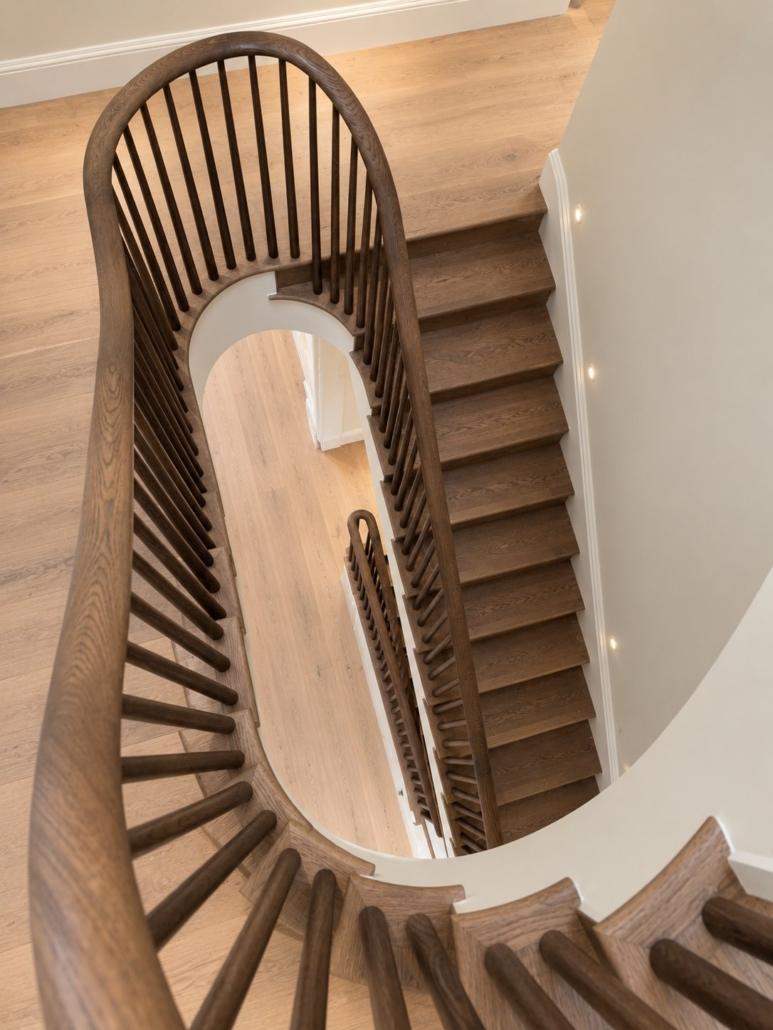
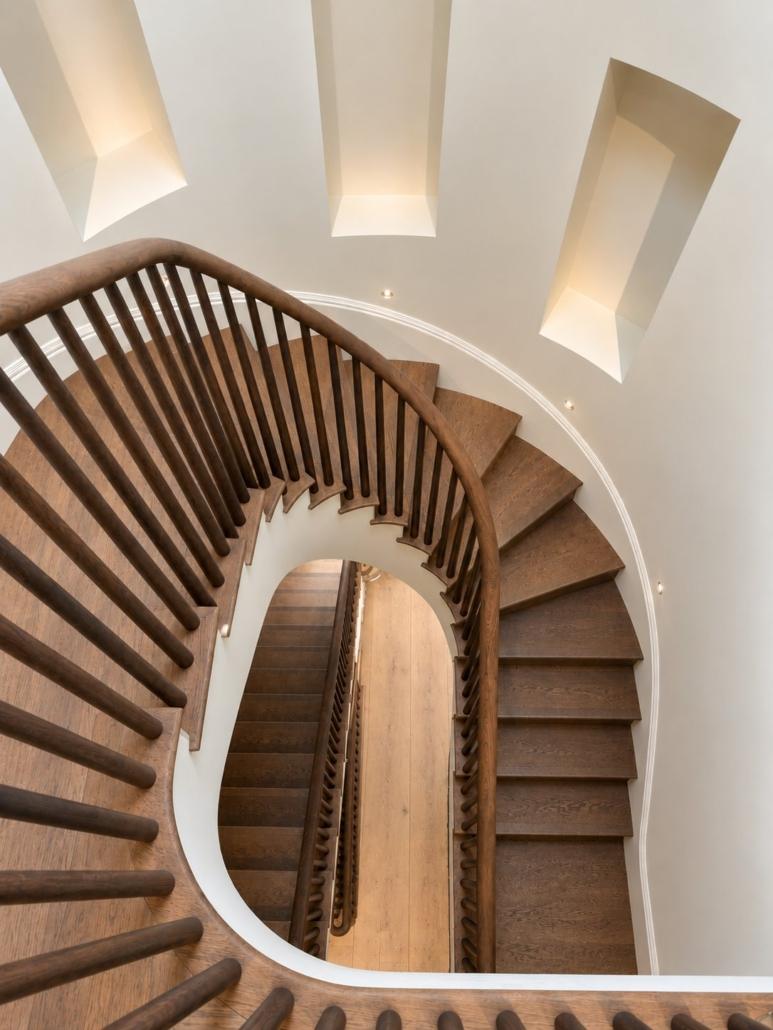
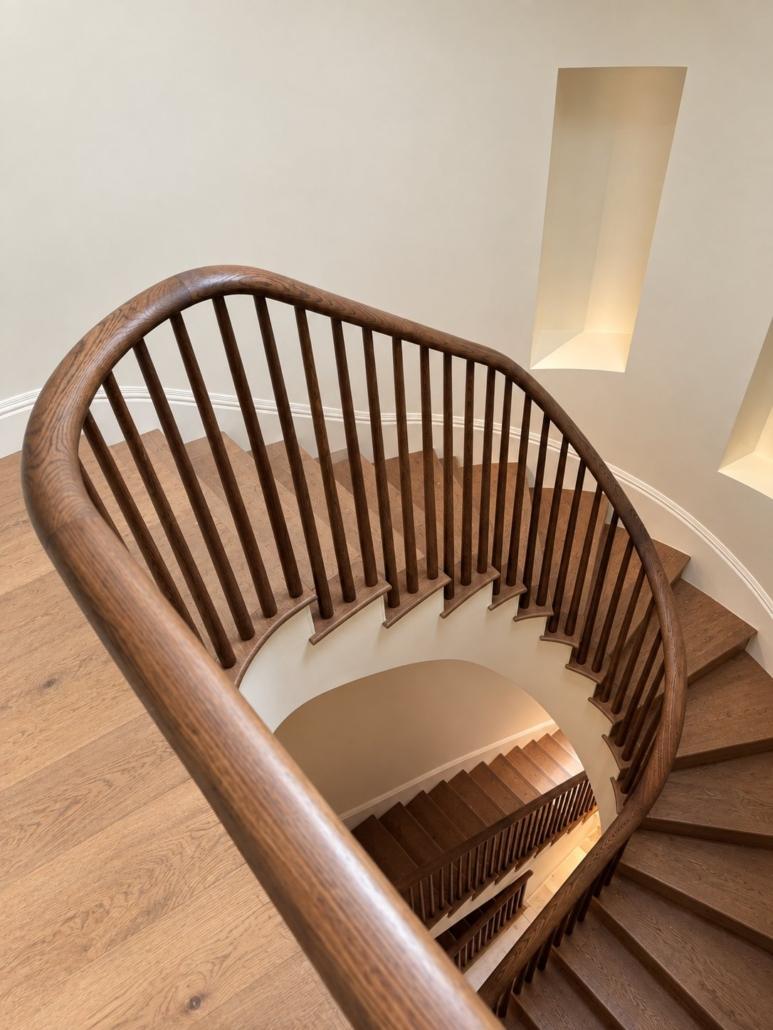
This house in Maida Vale has a staircase that winds up four floors round an oval stairwell. Our job was to give it one handrail from bottom to top: over 25 metres of European oak, unbroken through every turn, with tapered oak spindles beneath it and no newel posts anywhere.
One handrail, four floors
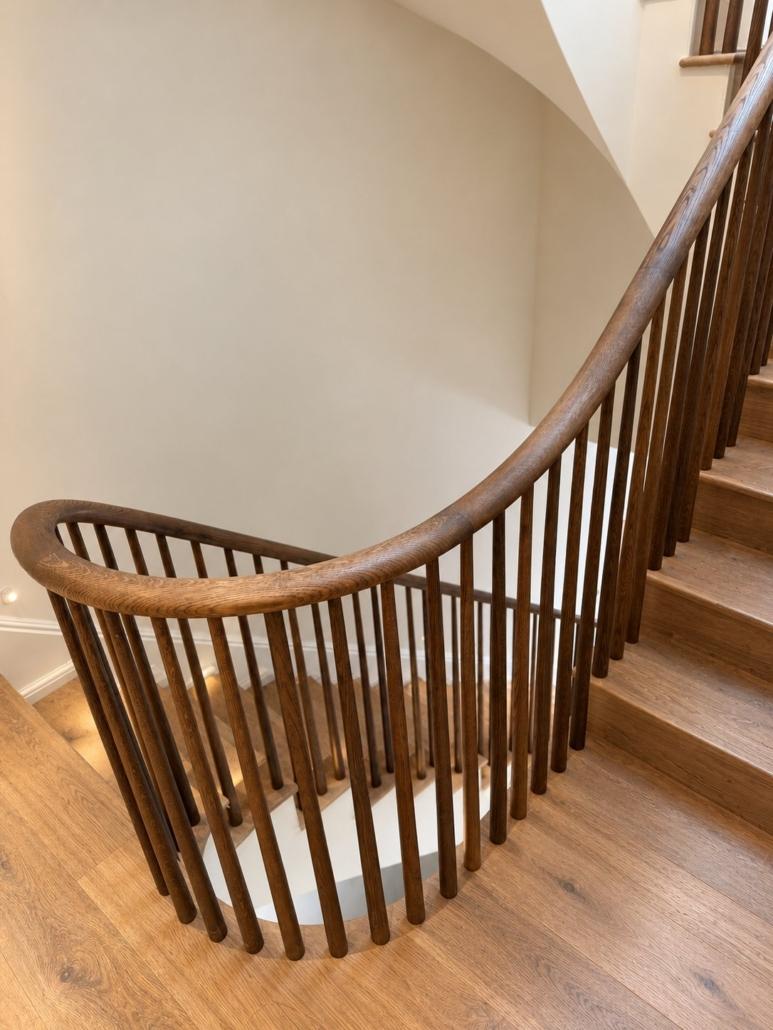
The rail turns at every landing and follows the curve of the stairwell all the way up, so each section has to meet the next exactly. We machined the handrail on our five-axis CNC to an oval profile, which sits comfortably in the hand and reads as one smooth line from the top floor down to the sweep at the foot of the stairs. See more of our continuous handrails.
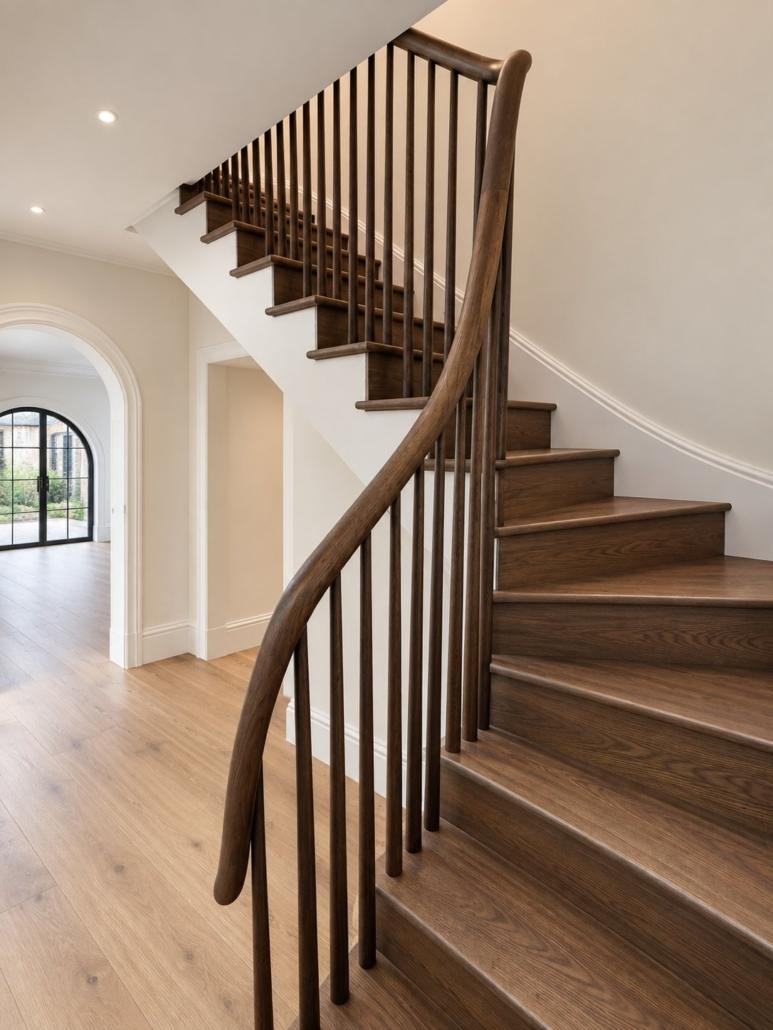
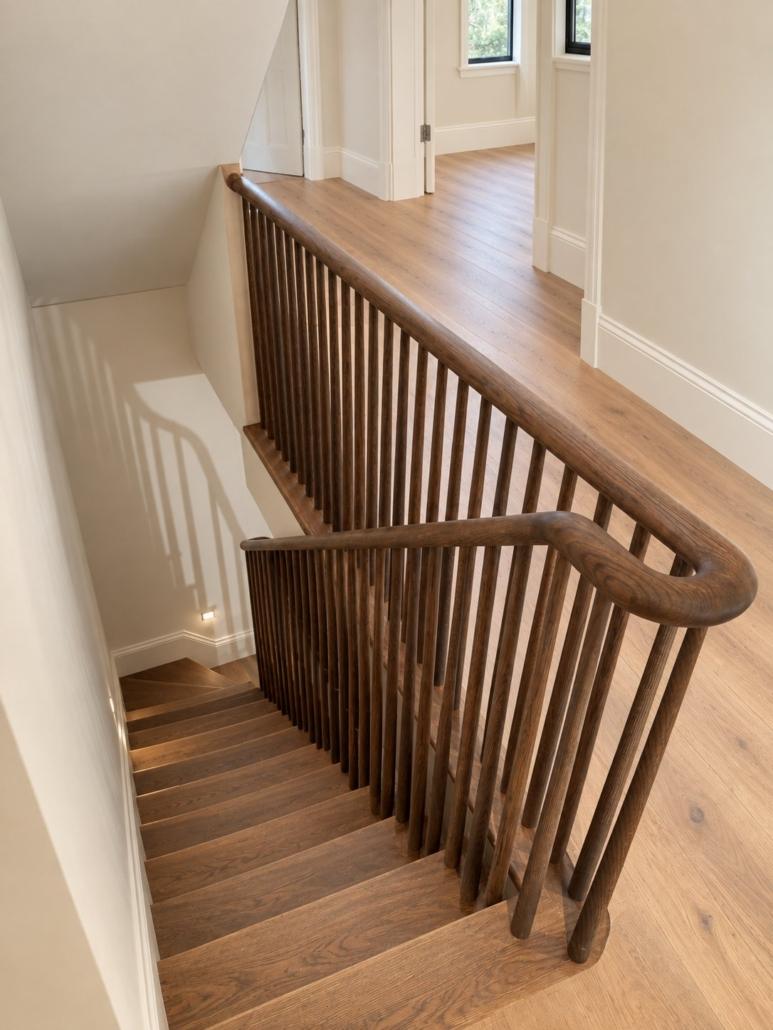
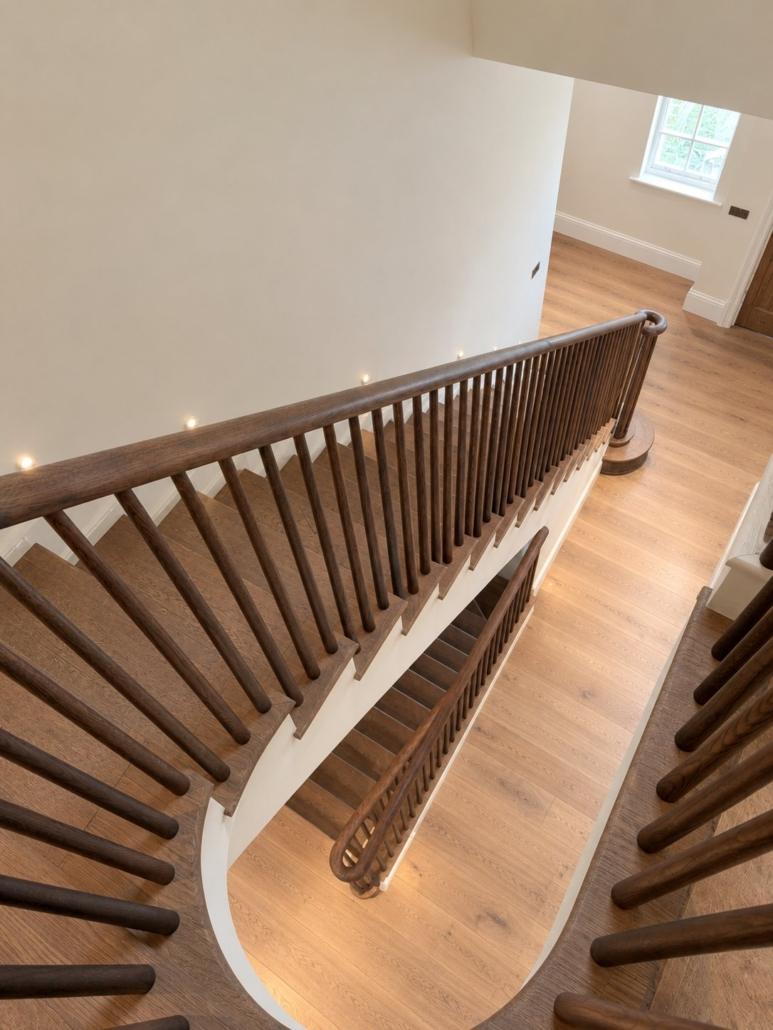
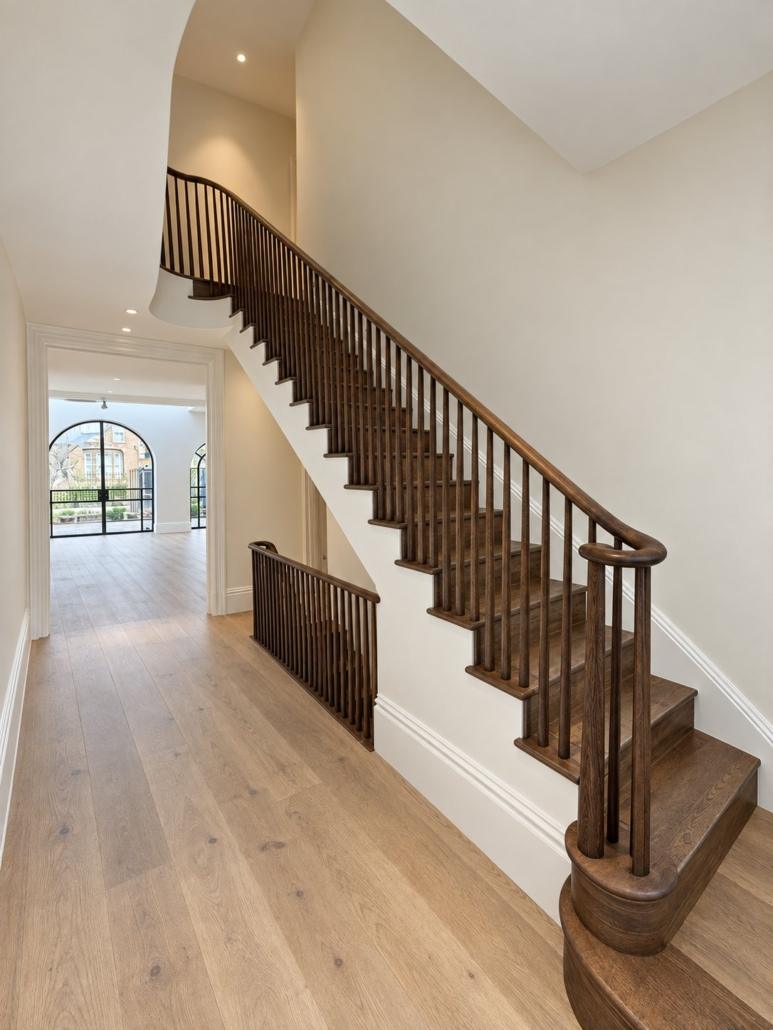
Tapered spindles, no newel posts
Newel posts are usually what keeps a balustrade rigid. Leaving them out keeps the stairwell open and lets the handrail do the talking, but the strength has to come from somewhere else. Each tapered oak spindle has a hidden steel fixing, and drops into a hole already machined in the underside of the handrail, so the spacing is set in the workshop before anything reaches site. More on our bespoke balustrades.
A wenge finish, done in two places
The staircase is French polished in a wenge colour, a deep brown named after the African hardwood. The oak gives the strength and the grain; the polish gives the darker tone. We sprayed the spindles in our factory, where it’s far easier to get an even finish on so many identical parts. The handrail was French polished on site once it was fitted, so the finish runs over the joints and the rail looks like a single piece of timber. If you’re weighing up timbers, our guide to the best wood for handrails is a good place to start.
Can a staircase work without newel posts?
Yes, if it’s designed that way from the start. On this stair the strength comes from the hidden steel fixings in each spindle and the continuous handrail above them. It still has to meet Building Regulations, which we check at the design stage.
What colour is wenge?
A very dark brown, close to the colour of wenge timber itself. We matched it on oak with French polish, which keeps the oak grain visible underneath.
Planning a curved or winding staircase? Get in touch and we’ll talk you through it.