
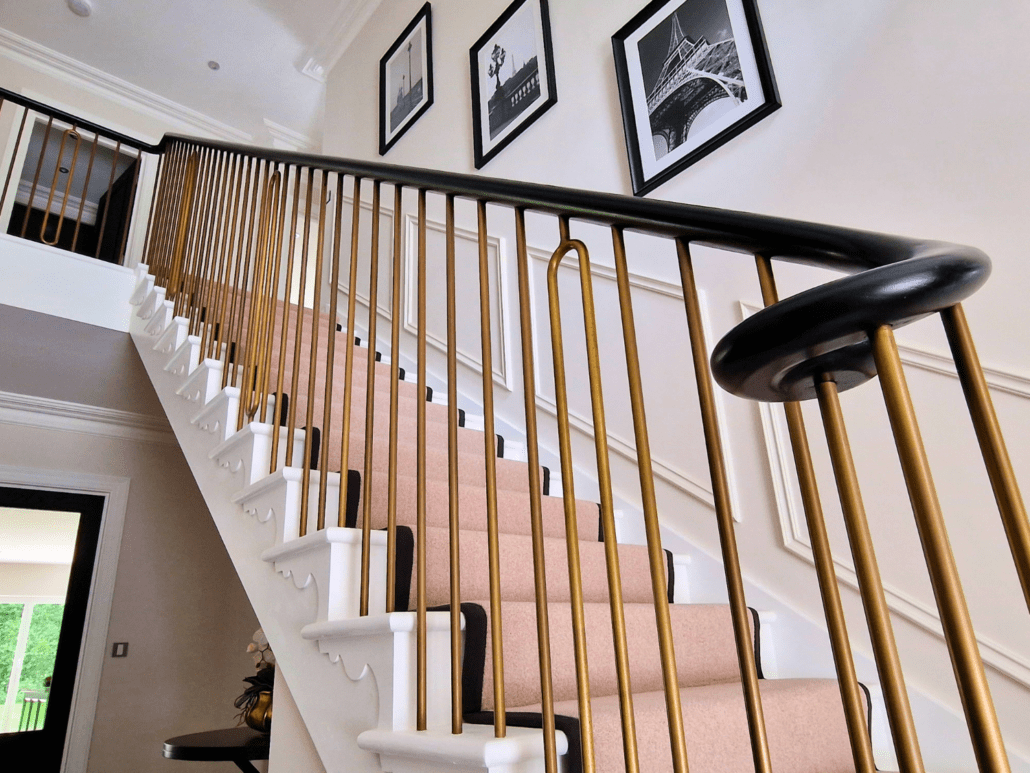
When to refurbish vs replace a stair handrail
Most home and building owners don’t think much about stair handrails. You probably touch yours dozens of times a day. But unless it starts to feel rough under hand or wobble in places, it tends to fade into the background – much like walls, windows, or doors. Once you do start noticing it, you need to decide whether refurbishment is enough, or if replacement makes more sense.
Refurbishing and replacing a stair handrail solve very different problems. Refurbishing works when the structure, height, and layout already make sense and the issue is mainly surface or finish. Stair railing replacement becomes the better option when the handrail’s position, continuity, or overall design no longer works, even if the timber itself hasn’t failed.
Because both choices affect cost, disruption, and how the staircase feels long term, you need to know when each is the better option.
What refurbishing a stair handrail usually involves
Refurbishing a stair handrail means keeping what’s already there and making it better, rather than changing how it works. The handrail stays in the same place, it follows the same line up the stairs, and it is fixed in the same spots. You’re working on the surface and the finish, not the shape or the layout. It usually involves:
- Stripping back paint, varnish, or stain to expose clean timber
- Sanding and refining the existing profile so it feels smooth
- Applying a new finish suited to how the staircase is used
- Minor visual adjustments to improve things without changing layout
Refurbishment is mostly surface work. If the handrail has always been comfortable to use and you’re happy with how it runs along the stairs, refurbishment can give it a second life.
What stair railing replacement allows you to change
Replacing the handrail gives you freedom you don’t have with refurbishment. You’re no longer restricted to working with what you already have. If the rail has always felt a bit off, replacement lets you deal with that properly instead of disguising it. You could, for example:
- Change the handrail height, diameter, or grip profile
- Improve continuity across landings, turns, and flights
- Update materials or timber species
- Rework fixing positions for better strength and comfort
Those are things refurbishment can’t really change, no matter how good the finish is.
When refurbishing handrails makes sense
Refurbishing a stair handrail is often the right option when the basics are good and the issues are mainly visual or tactile.
If the timber is in good condition, free from deep cracks or movement, refurbishment can refresh the staircase without changing its character. Refurbishing staircase elements also works well when the handrail already follows the correct height and path, feels comfortable to grip, and is securely fixed. In those cases, replacing it is going to add cost without adding real benefit.
Signs replacement is usually the better option
Sometimes refurbishment just isn’t enough. If the handrail has never quite felt right, a new finish won’t change that. You’ll have the same problems, just with cleaner timber. Replacing a stair handrail is usually the better choice if:
- The handrail height or position feels awkward in daily use
- The rail stops and starts instead of running cleanly along the staircase
- Fixings feel loose, dated, or difficult to trust long term
- You want a different look that refurbishment can’t realistically deliver
In these cases, replacing railings saves you from paying to dress up something that still won’t work properly.
Safety, comfort, and compliance considerations
A stair handrail adds finish to a staircase, but its primary purpose is to support people as they move up and down the staircase.
Older handrails might have been fitted before current expectations and regulations around height, spacing, and continuity were common practice. That doesn’t automatically make them unsafe, but it does mean they’re sometimes harder to use than they need to be. Think about steep stairs, narrow flights, or changes in direction.
In homes with children, older occupants, or higher foot traffic, comfort and consistency are especially important. A new stair handrail can be designed to suit real use rather than forcing you to live with compromises inherited from an older installation.
Refurbishing vs replacing cost differences
When it comes to cost, it is important to remember that refurbishment isn’t always cheaper.
The cost of refurbishing can be fairly contained when the existing handrail is simple, easy to access, and in reasonable condition. The work is mostly time spent preparing the surface and applying a new finish. On more complex staircases, with curves, joins, or tight corners, the amount of labour involved can increase.
Replacing a stair handrail usually has more predictable costs, with materials and manufacture part of the price as well as fitting. But the overall cost is influenced by the design and size of the staircase rather than the condition of the old rail.
When comparing options, it’s worth thinking beyond the initial price and considering how long the result will last without further work.
How long-term plans affect the decision
Your plans for the property need to be factored into your decision too. If you’re updating finishes elsewhere, opening up spaces, or altering lighting, the stair handrail could become a focal point.
If the rest of the space is staying largely the same, refurbishing staircase elements can work well. But if you’re making bigger changes, replacing railings will give you more control over how the staircase fits into the overall design.
A quick way to sense-check your decision
If you’re torn between refurbishing and replacing, it usually helps to think more about how it feels in daily use. Most people already know, instinctively, whether a handrail feels right or whether they’ve just learned to live with it.
Before deciding, it helps to ask yourself:
- Does the existing stair handrail feel solid and comfortable every day?
- Does its shape and position still suit how the space is used now?
- Are you keeping it because you like it, or because it’s already there?
Clear “yes” answers suggest refurbishing handrails. Hesitation usually points toward replacement.
Getting expert input
Speaking to a specialist early can save a lot of back-and-forth later. An experienced team can look at the staircase and tell you whether refurbishment makes sense, or whether replacement is the more practical route.
At Handrail Creations, we design and manufacture bespoke handrails to perfectly complement any residential and commercial space. We use state-of-the-art tools to supply and install all parts with absolute precision.
Need advice for your staircase? Contact us and tell us what you’re planning.
Frequently asked questions
Can any stair handrail be refurbished?
Not always. A stair handrail needs to be structurally sound, well fixed, and suitable in height and position along the staircase. If those basics aren’t right, refurbishing handrails won’t fix the underlying issues.
Is replacing railings more disruptive than refurbishing?
Replacing railings can often be completed quickly and cleanly when planned properly by a specialist team. Refurbishing staircase elements can take longer if extensive preparation or awkward access is involved.
Will a new stair handrail change how the staircase feels?
Yes. Replacing a stair handrail allows you to improve grip, continuity, and comfort, which can noticeably change how the staircase is used day to day, especially on steep, narrow, or heavily used stairs.
How do I know which option gives better value?
Value depends on longevity and suitability. Refurbishing handrails can work well short term, but replacing railings often offers better long-term value when the existing handrail has design or safety limitations.


Leave a Reply
Want to join the discussion?Feel free to contribute!