
CNC Handrail Machining with Carved Details
Advanced CNC technology has transformed the way bespoke timber handrails are manufactured, allowing for levels of precision and consistency that would have been difficult to achieve just a few decades ago. However, while modern machinery plays an important role in today’s staircase manufacturing, some projects still rely heavily on traditional craftsmanship to achieve the desired result.
A recently completed staircase project in Chelsea, London provided the perfect example of how advanced manufacturing techniques and hand-carving skills can work together to create a truly unique staircase feature.
A complex curved handrail project
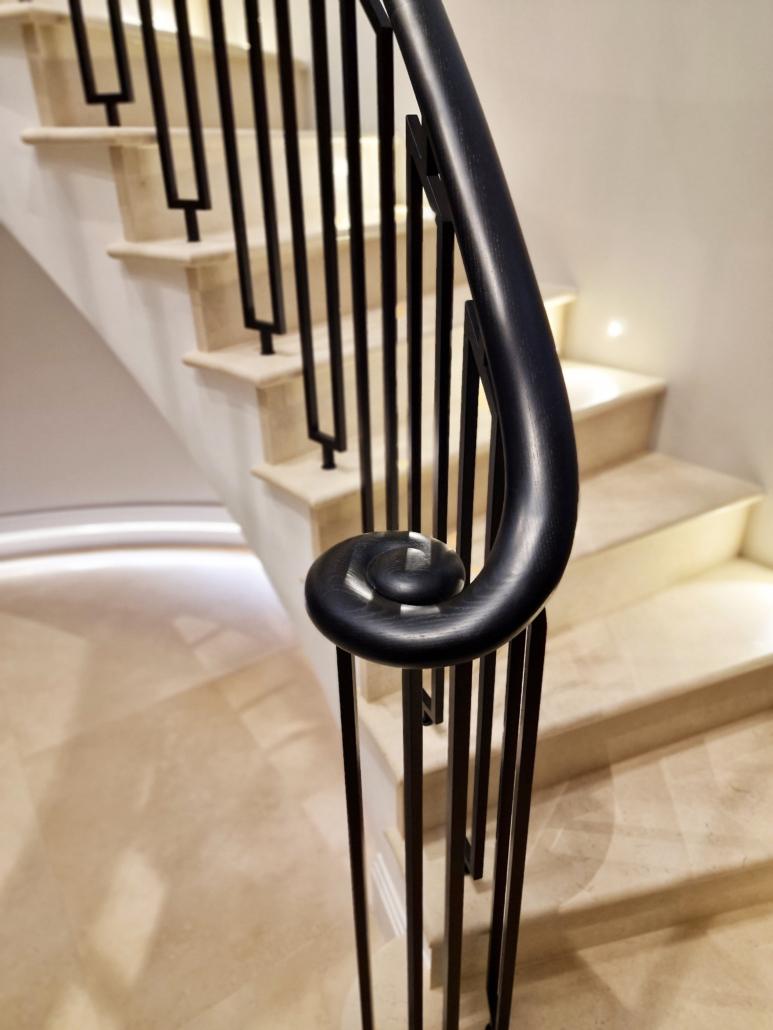
The project involved the manufacture of more than 25 metres of curved timber handrail for a luxury residential property. Designed as a central feature within the home, the staircase incorporated a series of sweeping curves, directional changes and decorative elements that required careful planning from the outset.
Unlike straight handrails, curved handrails present a number of technical challenges. Every section must align perfectly with the staircase geometry while maintaining a smooth, continuous flow throughout the installation. Even small inaccuracies can become noticeable once the handrail is fitted, particularly when dealing with long runs and complex transitions.
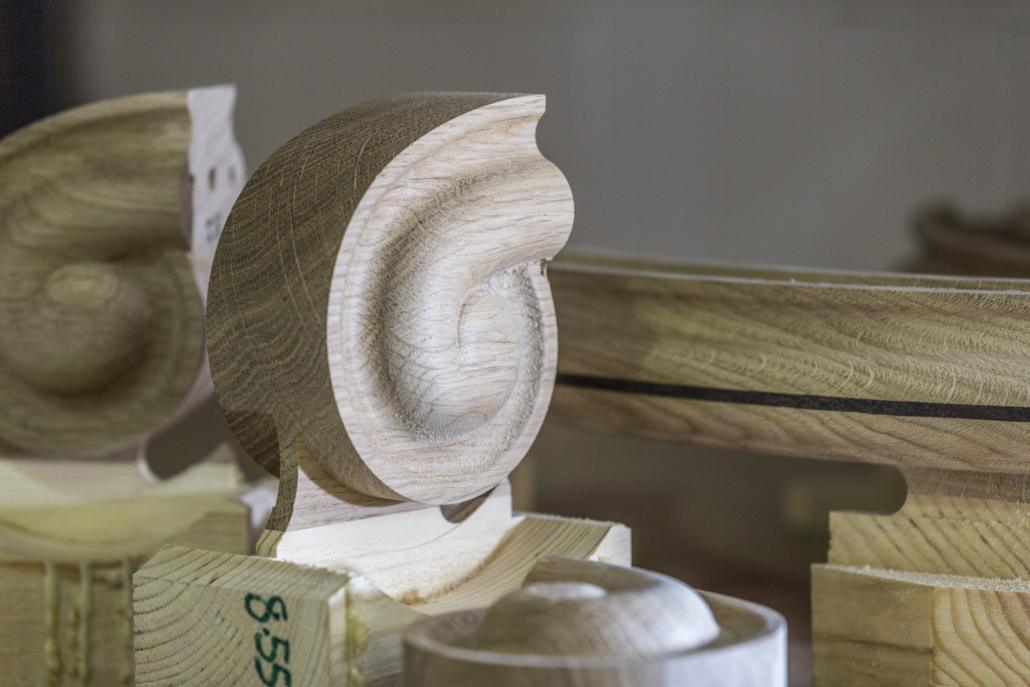
The design featured multiple volutes, ramps and swan necks, all crafted from European Oak. These decorative elements needed to blend seamlessly into the overall handrail design while maintaining both structural integrity and visual consistency.
Before any timber was machined, our team worked closely with the project specifications to create detailed CAD drawings and 3D models. This allowed every curve, connection point and transition to be mapped accurately, helping to minimise potential issues later in the manufacturing process.
Using CNC machining to achieve precision
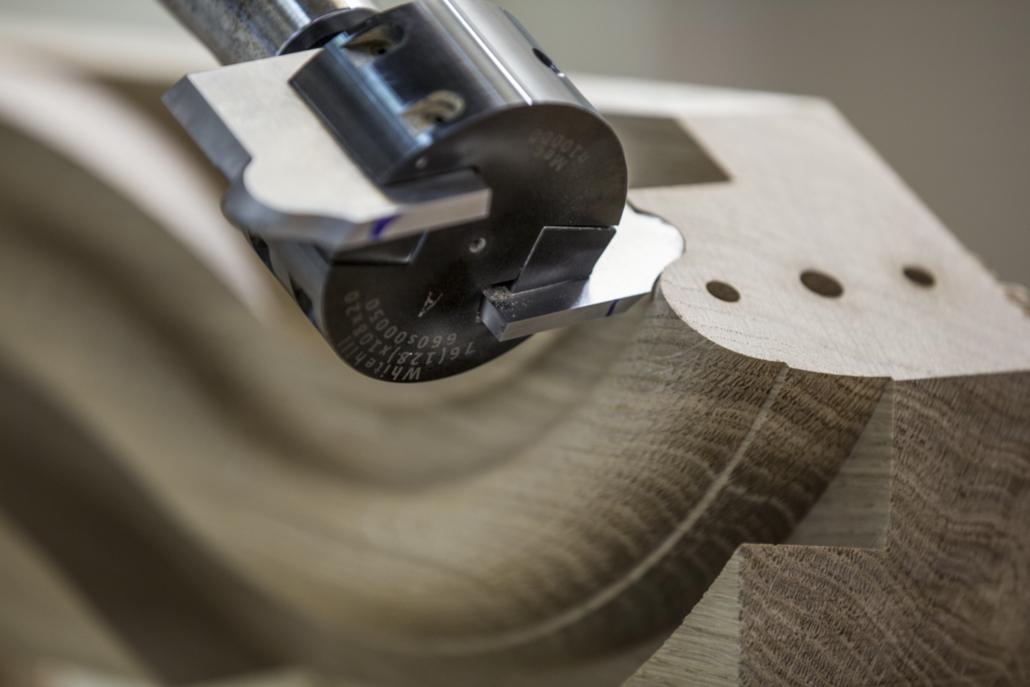
Once the design work had been completed, production moved to our workshop where the handrail components were manufactured using advanced 5-axis CNC machinery.
One of the greatest advantages of CNC technology is its ability to accurately reproduce complex shapes and profiles. For projects involving a curved timber handrail, this level of precision is particularly important. Each section must not only match the design perfectly but also fit together flawlessly once assembled on site.
Working to tolerances of less than 0.1mm, the CNC machinery shaped the various handrail sections, creating the intricate curves and flowing transitions that formed the basis of the staircase design. The technology also enabled the production of the more complex components, including the volutes and swan necks, which would traditionally require extensive manual shaping.
Throughout the machining process, each component was carefully inspected to ensure it matched the original design specifications. Maintaining consistency across more than 25 metres of handrail required careful attention to detail at every stage.
Where traditional craftsmanship makes the difference
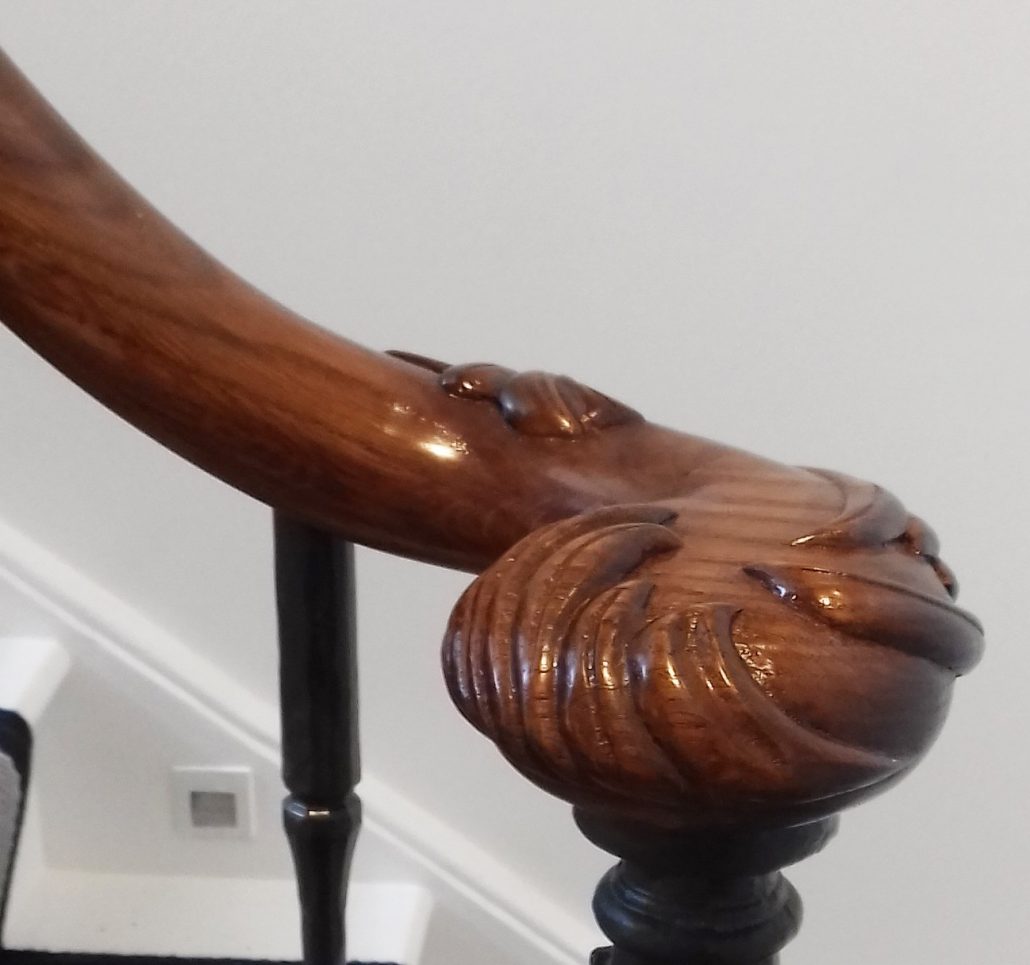
Although CNC machining completed much of the heavy shaping work, the project still required a significant amount of traditional hand-finishing. One of the client’s key requirements was the inclusion of decorative carved details that would give the staircase a distinctive character. While modern machinery can produce highly detailed forms, certain decorative features are often best achieved by skilled craftsmen working directly with the timber.
Once the machining process was complete, our workshop team carefully hand-carved a series of organic decorative elements into the handrail using traditional woodworking tools and chisels. This stage of the project required patience, precision and a thorough understanding of timber grain direction to ensure every detail was cleanly executed.
Unlike machine-produced decoration, hand-carved details introduce subtle variations and character that make each piece unique. It is these small details that often elevate a staircase from a functional feature to a statement piece within a property.
The combination of CNC machining and hand-finishing allowed us to achieve the accuracy required for the structural elements of the design while preserving the individuality and craftsmanship that the client was looking for.
The role of technology in bespoke timber handrail manufacture
Modern staircase manufacturing has evolved significantly in recent years. Technologies such as digital surveying, 3D scanning and CNC machining now allow complex staircase components to be designed and manufactured with greater accuracy than ever before.
For bespoke timber handrails, this technology offers a number of advantages. Digital modelling enables potential challenges to be identified before production begins, while CNC machining helps ensure every component is manufactured consistently and efficiently.
This is particularly beneficial when working on larger projects or heritage restorations where replacement components need to match existing designs precisely. By capturing accurate measurements and producing detailed digital models, it is possible to recreate complex profiles and curved sections that might otherwise be difficult to replicate.
However, despite these advances, traditional woodworking skills remain an essential part of the process. Technology can improve efficiency and accuracy, but the final quality of a staircase often depends on the expertise of the craftsmen responsible for the finishing work.
Balancing innovation and craftsmanship
Projects such as the Chelsea staircase demonstrate how modern manufacturing and traditional woodworking can complement one another. The CNC machinery provided the precision needed to manufacture the curved timber handrail accurately and efficiently, while hand-carving techniques added the character and individuality that helped bring the design to life. Neither process would have achieved the same result independently.
For staircase manufacturers, the goal is not to replace craftsmanship with technology but to use technology as a tool that supports and enhances traditional skills. By combining both approaches, it becomes possible to create bespoke timber handrails that meet exact technical requirements while retaining the quality and character associated with handcrafted joinery.
As staircase design continues to evolve, this balance between innovation and craftsmanship remains central to producing high-quality, bespoke results. Whether manufacturing contemporary handrails for modern homes or creating detailed features for period properties, the combination of advanced CNC machining and traditional woodworking techniques continues to open up exciting possibilities for staircase design.
Looking for a bespoke timber handrail?
Whether you’re restoring a period property, designing a luxury staircase or planning a completely bespoke project, we have experience in both residential and commercial projects. The right combination of craftsmanship and manufacturing expertise can make all the difference.
At Handrail Creations, we specialise in creating bespoke timber handrails, curved handrail systems and custom staircase components tailored to the unique requirements of each project. To discuss your ideas or learn more about our design and manufacturing process, get in touch with our team today.


Leave a Reply
Want to join the discussion?Feel free to contribute!